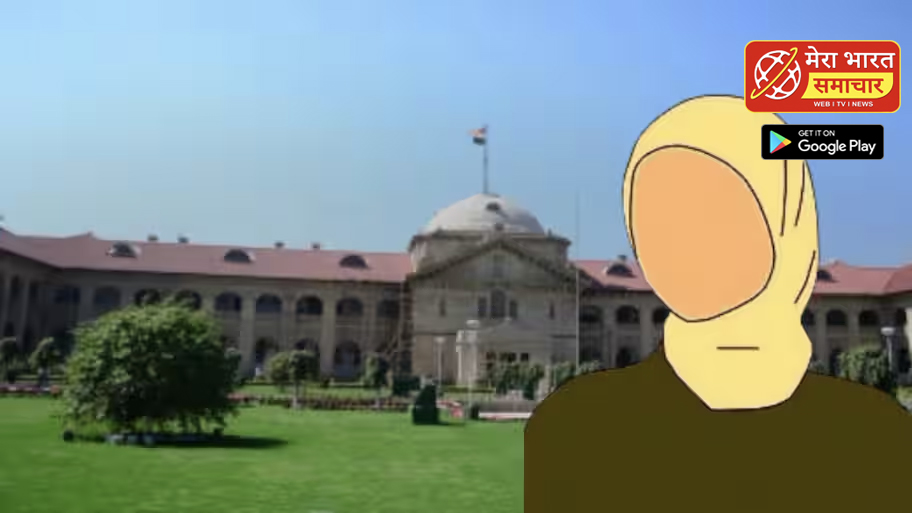
The Allahabad High Court has dismissed a petition filed by a Muslim student seeking permission to wear a hijab, or headscarf, along with the prescribed uniform at her school in Prayagraj.
The court held that the student had not placed enough material before it to establish that wearing a headscarf is an essential religious practice in Islam protected under Article 25 of the Constitution.
The judgment was delivered on August 21 by a Division Bench comprising Justices J.J. Munir and Indrajeet Shukla. The case involved a minor student who had completed Class X and wanted to continue her education in Class XI at the same private, unaided school.
According to the petition, the student had been wearing a headscarf since Class VI and had continued to do so through Class X without facing objections.
She approached the court after the school did not allow her to continue wearing it with the prescribed uniform. The petition was filed through her mother.
The student argued that wearing the headscarf was an essential part of her religious practice.
However, the High Court said that merely making such a claim was not enough to invoke the protection of Article 25.
The Bench noted that no factual or legal material had been presented to demonstrate that wearing a headscarf was indispensable to the practice of Islam.
The court also examined photographs from the student’s previous school years. It observed that she appeared to be the only girl wearing a headscarf and that even other students from the same religious community at the school were not doing so.
The Bench referred to earlier judicial decisions on the issue and noted that courts had previously taken the view that wearing a headscarf could not be treated as an essential religious practice whose absence would jeopardise a person’s faith. The court therefore rejected the student’s reliance on Article 25.
The judgment also underlined the importance of a school’s uniform policy. The court held that a private unaided educational institution can enforce a bona fide and non-discriminatory dress code, particularly when the rule is applied uniformly to students. In such circumstances, a student cannot claim an automatic legal right to add clothing of her choice to the prescribed uniform.
The ruling adds to the continuing legal debate in India over religious attire in educational institutions.
While the judgment deals specifically with the circumstances of this student and school, it reiterates the court’s view that a claim of religious freedom must have a proper factual and legal foundation rather than rest only on an assertion.