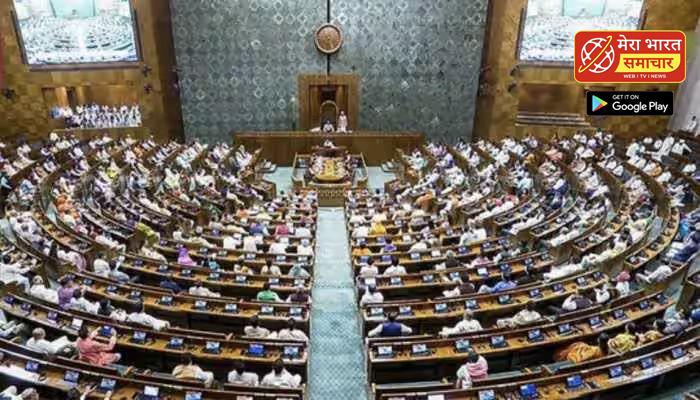
As voting on the Women’s Reservation (Amendment) Bill, 2026 inches closer in the Lok Sabha (lower house of Parliament), spotlight is on numbers, party positions and voting discipline. The final outcome will depend on how MPs from different sides choose to vote. The bill seeks to reserve 33 percent seats for women in Parliament and state assemblies.
The House is also debating the Constitution (One Hundred and Thirty-First Amendment) Bill, 2026 along with the Union Territories Laws (Amendment) Bill, 2026, which extends provisions to Delhi and Jammu and Kashmir. The Delimitation Bill is also under discussion, which proposes to increase and redraw constituencies, taking their number up to 850 seats.
The debate has brought together several political arguments on representation, federal balance and electoral structure.
Opposition parties have raised concerns that delimitation, if based on the 2011 Census, could reduce representation for southern states in the Lok Sabha. The debate has added another layer to a complex voting situation in the House.
Congress President and Leader of Opposition in the Rajya Sabha Mallikarjun Kharge said that INDIA bloc MPs are opposed to both the Constitution (131st Amendment) Bill and the Delimitation Bill in the Lok Sabha.
He said the INDIA bloc plans to oppose and defeat the bills in the Lok Sabha. “Our people are fighting and will defeat it in the Lok Sabha,” he added.
Congress MP K Suresh called the Delimitation Bill dangerous and said it would weaken Opposition parties. He clarified that the Opposition is not against the women’s reservation proposal but is opposing the delimitation exercise, which he described as harmful to the political balance of the country.
He said the bill would “demolish” Opposition parties and argued that it should not be linked with other constitutional changes.
CPI MP P Sandosh questioned the decision to combine delimitation, census-related changes and women’s reservation in the same legislative process. He asked for clarity on the government’s approach and said Prime Minister Narendra Modi should address concerns raised by Opposition parties.
He also said the Women’s Reservation Bill had earlier received unanimous support in Parliament and questioned why other proposals were being bundled with it. He told ANI that the government appeared to be linking different issues together and raised concerns about its impact on the federal structure.
On the other side, JD(U) MP Sanjay Kumar Jha questioned the Opposition’s protest while pointing out that the Nari Shakti Vandan Adhiniyam (official name of the reservation bill) was passed unanimously in 2023.
He also said the prime minister had clarified that no changes had been made to the delimitation process and asked why there was opposition despite earlier consensus.
He added that questioning the bill was being associated to doubts over women’s representation.
The Congress has issued a three-line whip asking its MPs to be present in the Lok Sabha for the special sitting from April 16 to 18 and vote according to the party line.
Prime Minister Narendra Modi also appealed to all political parties to support the amendment to the Nari Shakti Vandan Adhiniyam. He said the debate had continued late into the night and added that concerns and doubts raised by members had been addressed during discussions.
In a post on X, he said that responses had been given to clarify misconceptions and that members had been provided with additional information during the debate.
He also said that political delays on women’s reservation had continued for decades and called for support for the amendment, saying that women’s representation in decision-making must improve.
He added that voting in the Lok Sabha was approaching and urged parties to consider the proposal carefully.