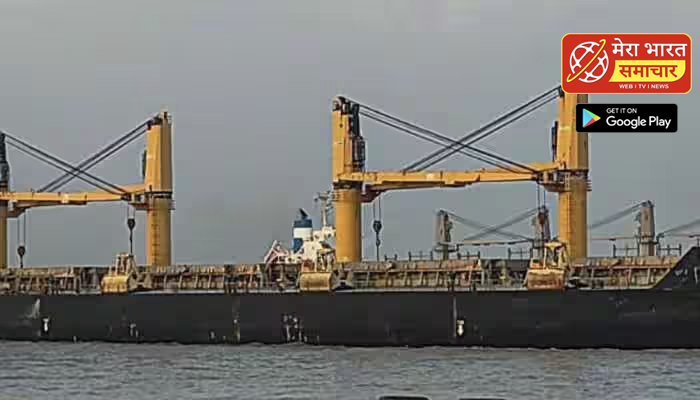
Iran is reportedly charging certain merchant vessels up to $2 million to permit passage through the conflict-affected Strait of Hormuz amid its ongoing war with the combined forces of Israel and the United States, as per the news report citing Iranian lawmaker.
The claim was allegedly made by member of the Iranian parliament’s national security and Foreign Policy committee, Alaeddin Boroujerdi on Sunday.
He is set to have described the measure as Iran’s way of asserting its “authority” over the strategically important waterway, saying Tehran has established a “new concept of sovereignty” over the strait after 47 years, as per the news agency Anadolu Ajansı.
“Collecting $2 million as transit fees from some vessels crossing the strait reflects Iran’s strength,” Boroujerdi said.
According to London-based news outlet Iran International, he said, “Now, because war has costs, naturally we must do this and take transit fees from ships passing through the Strait of Hormuz.”
He made this comments during a television program cited by Iranian state media.
Boroujerdi described the move as a demonstration of Iran’s “strength.”
Notably, such transactions would pose a significant challenge for shipping companies, as Iran remains subject to multiple international sanctions.
Since early March, Iran has largely restricted passage through the Strait of Hormuz for most vessels, a critical oil route that typically carries around 20 million barrels per day and accounts for roughly 20% of global liquefied natural gas trade. This disruption has led to higher shipping and insurance costs, increased oil prices, and growing concerns for the global economy.
Iran, however, seems to be applying the blockade in a selective way, according to recent news reports.
Iranian officials, including Foreign Minister Abbas Araghchi, have recently stated that the Strait of Hormuz is closed only to tankers and vessels belonging to “enemies and those supporting their aggression.” Tensions surrounding the strait intensified after U.S. President Donald Trump issued a 48-hour ultimatum on Saturday (IST), demanding that Iran fully reopen the waterway.
He also warned that failure to meet the deadline would result in strikes on Iranian power plants.
Tensions in the region have escalated further since the United States and Israel carried out a joint offensive on Iran on February 28, which has reportedly resulted in more than 1,300 deaths, including Iran’s then-Supreme Leader Ali Khamenei.
In response, Iran has launched drone and missile attacks targeting Israel, as well as Jordan, Iraq, and Gulf countries, which it claims are aimed at US military assets. These strikes have caused casualties, damaged infrastructure, and disrupted global markets and air travel.